

When people search for team aelftech com, they are usually trying to answer a practical question: who is behind this company, and can they be trusted? A team page is where a business introduces the people who run it, so it is often the first stop for anyone doing due diligence — a potential customer, a job seeker, a partner, or simply a careful reader who found the site and wants to know whether real people stand behind it.
This is an independent informational guide, not Aelftech’s official website. Public information about the company and its team is limited, and this article does not invent names, biographies, or credentials it cannot verify. Instead, it explains what a team page like the one suggested by the search term team aelftech com normally shows, the roles you can expect to find, how to verify what you see, and the warning signs that a team page deserves a second look.

What Is the Team Aelftech Com Page?
The phrase points to the team section of the Aelftech website — the page, often titled “Our Team” or “Meet the Team,” where a company presents its staff. On most company sites this page lives one click from the homepage, linked from the main menu or the footer, and it works alongside the About page: the About page tells the company’s story, while the team page puts faces and job titles to that story.
The name “Aelftech” suggests a technology business, and tech companies lean heavily on team pages because their products are intangible. A software firm cannot show you a factory; instead it shows you engineers, designers, and support staff as evidence that capable people exist behind the product. Whether Aelftech’s own page follows every convention below cannot be confirmed from outside — check the live site — but the conventions themselves will help you read whatever you find there.
Why People Look Up a Company’s Team Page
Understanding the motives behind the search helps you use the page well. Customers check team pages before paying for a service, because a named leadership team signals accountability: if something goes wrong, there are identifiable people responsible. Job seekers read them to learn who they would work with and whether the company is genuinely hiring and growing. Other businesses look before partnering, outsourcing, or buying, for the same reason individuals do — people are easier to verify than logos. And researchers compiling a company profile, a process we walk through in our guide to building a research dossier for a target company, treat the team page as one source among several, cross-checking it against registries, reviews, and professional profiles.
How Team Pages Are Usually Structured
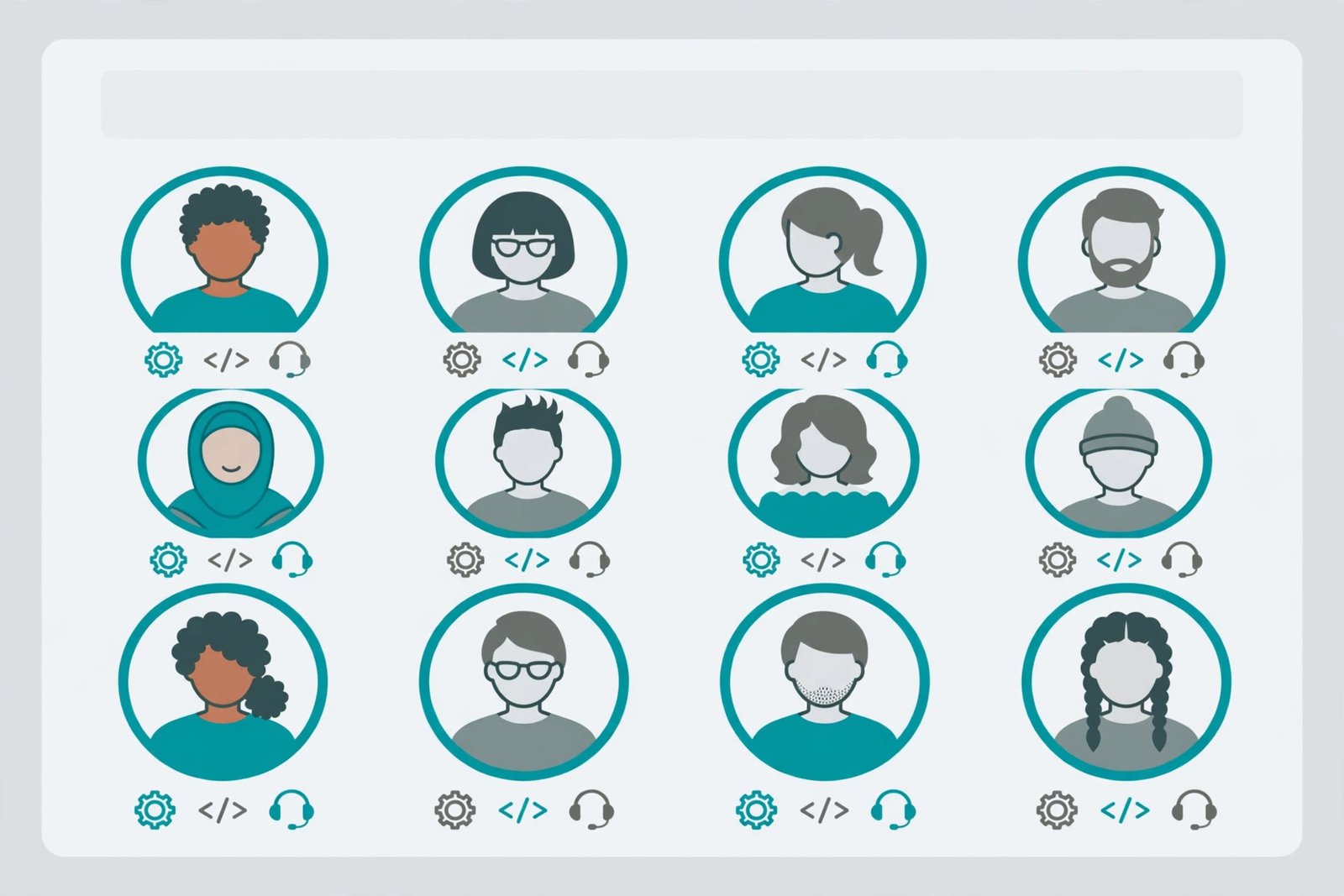
Most team pages follow a predictable layout, and recognising it helps you extract information quickly. Leadership appears first, in order of seniority, followed by department groups. Each person gets a card: a photograph, a name, a job title, and sometimes a short biography or links to professional profiles. Larger companies add department filters so visitors can view one group at a time; smaller ones simply list everyone on a single page. The order and grouping are themselves informative. A page dominated by sales titles tells a different story from one dominated by engineers, and a page with only two or three people, however polished, describes a very small operation — which is neither good nor bad, but is worth knowing before you rely on the company for something long-term. If the Aelftech page follows this pattern, you should be able to map its people onto the role groups in the next sections within a minute or two; if it departs from the pattern, that departure is worth a moment’s thought as well.
Roles You Typically Find on a Tech Team Page
Team pages differ, but technology companies organise themselves into recognisable groups. Knowing the groups helps you understand both what a company does and which person a question should go to.
Leadership and Founders
Chief executives, founders, and directors usually appear first, often with the longest biographies. These entries tell you who set the company’s direction and who is publicly accountable for it. A leadership bio that mentions previous companies or projects gives you something concrete to verify elsewhere.
Engineering and Development
Software engineers, developers, and technical leads build and maintain the product. On a tech company’s team page this is frequently the largest group, and its size relative to the whole team hints at whether the company builds its own technology or mainly resells someone else’s.
Design and Product
Designers and product managers decide how the product looks and which features get built. Their presence on a team page suggests the company invests in its own product experience rather than only in sales.
Support and Customer Success
Support staff are the people customers actually talk to. A company that publicly names its support team is making a small promise of accessibility — worth noting if you are deciding whether to rely on the company for something important.
Marketing, Sales and Operations
These roles handle growth, partnerships, billing, and the daily running of the business. Operations staff rarely appear on small team pages, but in larger companies they are listed alongside everyone else.
How to Verify Team Members for Yourself
A team page is the company speaking about itself, so treat it as a claim to be checked rather than a fact to be absorbed. This short routine works for Aelftech or any other company.
- Search each key name separately. Put a leader’s name in a search engine together with the company name. Real professionals leave traces: conference talks, articles, interviews, or profiles.
- Cross-check professional profiles. LinkedIn and similar networks should broadly match the team page — same role, same company, plausible history. A profile created last month with no connections is weak evidence either way.
- Reverse-search profile photos. Stock photos and stolen portraits are the oldest trick on fake team pages. A reverse image search that finds the same “employee” on a stock library or another company’s site settles the question immediately.
- Look for consistency across the site. Do the same names appear in blog bylines, press mentions, and contact pages? Consistency across pages and over time is hard to fake cheaply.
- Check the company itself. A registered business name, a physical address, and a working contact channel matter more than any individual biography. Our article on HRMS Globex and how HR software organises employee data shows, from the software side, how structured real companies keep their staff information.
What a Team Page Cannot Tell You
Even a genuine team page is a curated photograph, not an audit. It will not show you former employees, contractors, or how long anyone has actually worked there. It says nothing about the quality of the product, the fairness of the pricing, or how support behaves when something breaks. Small companies may also keep pages out of date for innocent reasons — a departed employee listed for a year is common and usually reflects a neglected website rather than deception. Use the team page to establish that plausible, checkable people exist, then base any serious decision on broader evidence: reviews, references, contracts, and direct conversation.
Red Flags to Watch For
- Too-perfect biographies. A page where every member has an elite degree, a decade of experience, and no verifiable footprint anywhere else deserves suspicion.
- Stock or mismatched photos. Images that appear on stock-photo sites, or photos that look like unrelated headshots pasted together, undermine the whole page.
- No way to contact anyone. A company proud of its people usually still offers a general contact route. A team page with no contact page anywhere on the site is a structural warning sign.
- Pressure to skip verification. If sales conversations push you to decide before you can check the basics, that urgency is itself information.
- Names that change between visits. Legitimate pages evolve slowly. A leadership team that is completely different every few months is not a team; it is set dressing.
How Other Sites Present Their Teams
Comparing team pages sharpens your judgement quickly. In this same batch of guides, the crew pages of a social platform make an interesting contrast: our article on the Crew Cloudysocial Com page and how that team works looks at a platform crew, while the Crew Cloudysocialcom overview covers the same company’s team from another angle. Social platforms emphasise community and content roles; a technology company like Aelftech would be expected to emphasise engineering and support. When a page’s emphasis does not match the business it claims to be, ask why.
How to Contact Aelftech
If you need to reach the company — about a product, a job, or a concern — use the channels the official site itself provides: its contact page, a listed business email, or a contact form. Introduce yourself, state your reason plainly, and keep copies of what you send. Be cautious of contact details for Aelftech that appear on unrelated directories or in unsolicited messages; third-party listings are frequently outdated, and impersonation of small companies is not rare. If the site lists team members with individual contact routes, reserve those for the specific person whose role matches your question rather than emailing the whole list.
Response times vary widely at small companies, so allow a few working days before following up once, politely, through the same channel. If a genuinely urgent matter — a billing error or an account problem — gets no response through any published route, that silence is itself data about the company, and it is reasonable to factor it into whether you continue dealing with them.
What Job Seekers Can Learn From a Team Page
If you arrived at the team page while considering a job, read it as a preview of the workplace. The ratio of junior to senior staff hints at how much mentoring exists. The presence of dedicated support and operations roles suggests a company past the chaotic start-up stage, while a page where the founder holds five titles suggests the opposite. Photos and biographies written in individual voices usually reflect a healthier culture than identical template text under every name. Check also whether the careers or team page mentions remote work, locations, or growth — then confirm anything important in the actual job posting or interview, because team pages are marketing documents and age quickly. A company that keeps its team page current is, at minimum, a company that pays attention to how it presents itself, and that attentiveness is a reasonable early signal when you are deciding where to apply.
Frequently Asked Questions
What is team aelftech com?
It refers to the team page of the Aelftech website — the page where the company presents the people behind it, their roles, and sometimes short biographies. Check the live site to see its current contents, since team pages change as staff join and leave.
Who runs Aelftech?
Public information available outside the company’s own site is limited, and this guide does not name individuals it cannot verify. The company’s own About and team pages are the starting point, and leadership names found there can be cross-checked with professional profiles and web searches.
How can I tell if a team page is genuine?
Search the named people individually, cross-check professional profiles, reverse-search the photos for stock images, and look for consistency across the site’s pages. Real teams leave independent traces; invented ones usually exist only on the page itself.
Why does the team page matter before buying or applying?
It shows whether identifiable people are publicly accountable for the business. That does not guarantee quality, but its absence — or a page that fails basic verification — is useful information before you spend money or share personal details in an application.
What should I do if I cannot find the team page?
Look in the site’s main menu and footer for “Team,” “About,” or “Company” links. Some small companies fold team information into the About page instead of maintaining a separate one. If neither exists, weigh that absence alongside other trust signals.
Is it appropriate to contact team members directly?
Use the company’s public contact channels first, especially for support or sales questions. Direct messages to individual staff on personal accounts are easy to miss and easy to mistake for spam; a message through official routes is more likely to reach the right person and be answered.
Conclusion
The search for team aelftech com is really a search for reassurance: that a real, organised group of people stands behind a website. A team page can provide that reassurance, but only after you test it — verify the names, check the photos, confirm the company itself, and look for the red flags listed above. Public information about Aelftech’s team is limited, so let the live site and your own cross-checks, rather than any second-hand description, form your final judgement.



Leave a Reply