

Knowing that a platform has a team is one thing; understanding how that team is organised is another. Readers who search for crew cloudysocial com are usually after the working details: what roles exist on the Cloudy Social crew, what the members handle day to day, and how their work fits together to keep the platform running.
This guide answers at the level the public record allows. Public information about Cloudy Social’s internal organisation is limited, and nothing here invents staff names, team sizes, or internal policies. Instead, it maps the role structure a platform crew page like this typically describes, explains how those roles collaborate in practice, and shows you how to route a question or problem to the right part of the team. Treat the live crew cloudysocial com page as the authority on specifics; treat this article as the framework for reading it.

What the Crew Cloudysocial Com Page Is
The page is the platform’s public team listing: the place where Cloudy Social presents its crew, their roles, and — depending on how much the company chooses to share — short notes about individual members. Where a “meet the team” page focuses on introductions, a crew page with roles emphasises structure: who is responsible for what. That emphasis is genuinely useful to users, because most reasons to look up a crew are routed questions in disguise — I have a technical problem, a content problem, a partnership idea — and a role list tells you which door to knock on.
If your interest is more in the people than the structure, our companion guide to the Crew Cloudysocial team behind the platform covers the meet-the-team angle; this article stays with roles, members’ responsibilities, and workflow.
The Main Roles on the Crew
Team Leads and Coordinators
Somebody has to assign work, settle priorities, and speak for the team, and on a crew page that is usually a lead, manager, or founder wearing the coordinator hat. Leads connect the crew to the platform’s owners or business side, and they are the escalation point when a problem crosses between roles — a bug that is also a community-relations issue, for example.
Engineers and Technical Staff
Engineers build features, fix bugs, and keep servers and apps healthy. In workflow terms they work in cycles: planned development, testing, release, then monitoring. Users meet this role indirectly, through release notes and through how quickly reported technical problems actually get fixed.
Community and Content Members
Community staff host the platform’s social life — prompts, events, featured posts, welcome messages — while content members may produce or curate the platform’s own posts and help pages. Together they determine how active and welcoming the platform feels, and they feed user sentiment back to the rest of the crew.
Moderation and Safety Members
Moderators review reports, apply the rules, and document decisions. In a well-organised crew, moderation works from a queue with priorities — safety issues first, spam next, disputes after — and with an appeals route, so decisions are consistent rather than personal. This role’s structure matters more to users than any other, because it decides how safe the platform feels in practice.
Support Members
Support is the crew’s front door: account access, billing or subscription questions where they exist, how-to help, and the triage that sends technical problems to engineers and content problems to moderators. Support members usually work from shared inboxes and ticket systems so any member can continue another’s conversation.
How Members Typically Work Together Day to Day
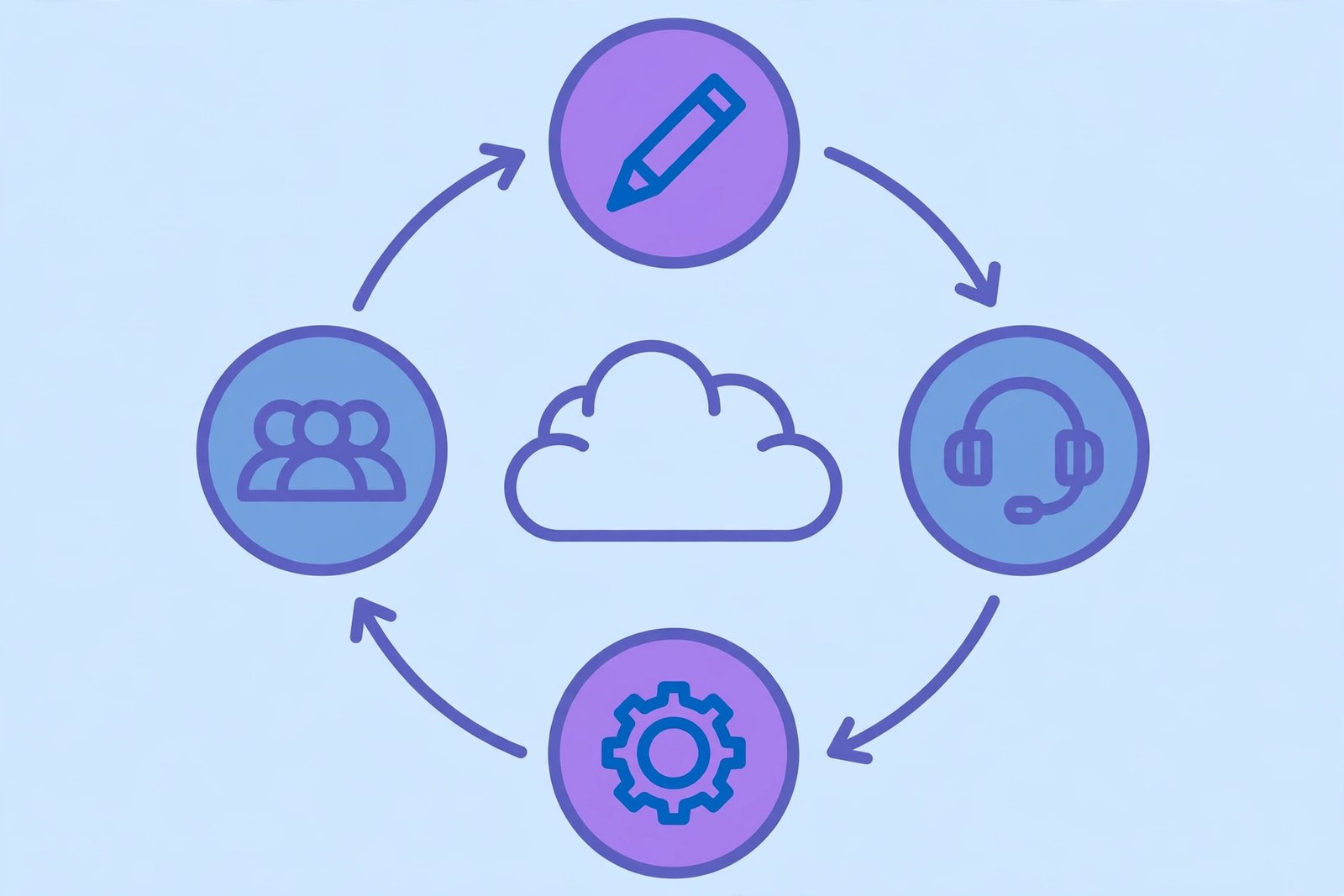
The daily rhythm of a small platform crew is a loop between planned work and incoming work. Planned work — features, content calendars, campaigns — is scheduled and owned by individuals. Incoming work — reports, tickets, bugs, press or partnership messages — arrives continuously and is triaged, usually each morning, into the right queue. Short stand-up check-ins or a shared task board keep the loop visible: everyone can see what is blocked, what is waiting on a user reply, and what ships this week.
Hand-offs are where small teams succeed or fail. A support member who documents a bug clearly saves an engineer an hour; a moderator who notes a pattern of spam accounts gives engineering a product fix instead of a hundred individual deletions. When you read a crew page, you are seeing the named roles; this invisible hand-off discipline is what makes the roles add up to a functioning team, and its results — response times, fix quality, consistent decisions — are what you can actually observe from outside. Companies formalise exactly this kind of staff organisation with HR systems, a topic explored in our article on HRMS Globex and how HR software works.
How an Issue Travels Through the Crew: An Example
Abstract roles become clearer with one concrete journey. Imagine a user reports that photos are failing to upload. The report lands in the support queue, where a support member checks it against known problems — if three similar reports arrived overnight, that pattern itself is the first clue. Support reproduces the problem or gathers the details that engineering will need: device, app version, connection type, the exact error shown. The issue moves to the engineering queue with that context attached, and an engineer traces it to, say, a change in how the platform handles large images. A fix is built, tested, and released; support then closes the loop with the users who reported it, and the community team may add a short public note if the problem was widespread. Finally, someone records the incident so the next similar report is recognised in minutes instead of hours. Every step in that journey is a different crew role doing a distinct job, and the quality of the whole platform is largely the quality of those hand-offs.
How the Crew Supports Users and Creators
From a user’s seat, crew support has three layers. Self-help comes first: help pages, FAQs, and guides written by the crew so common questions never need a human. Assisted help comes second: tickets and messages answered by support, with moderation handling rule and safety matters in parallel. Escalation is the third layer: issues that need a lead’s decision — appeals, press, legal or partnership matters — move upward with the earlier conversation attached. Knowing the layers helps you write better requests: the clearer your first message, the fewer hand-offs it needs. Platform features shape these workflows too, and related product pages such as the one discussed in our guide to Cloudysocial Minison and how it connects to Cloudy Social show which parts of the service the crew actively maintains and promotes.
Members: Why Names and Bios May Be Limited
Readers sometimes find a crew page thinner than expected — first names only, no photos, or roles without people attached. There are ordinary reasons for this. Moderation and support staff worldwide receive harassment, and many platforms deliberately shield the people in those roles. Small crews also change faster than web pages do, and a cautious company may list only stable, public-facing members rather than publish a register it cannot keep current. Privacy law and simple personal preference play a part too. Limited bios are therefore weak evidence about legitimacy either way; judge the page instead by whether the roles make sense for the platform and whether the visible members can be corroborated elsewhere, the same cross-checking approach we outline in our guide to researching a target company thoroughly.
Crew Size and What It Means for Users
Nothing public fixes the size of Cloudy Social’s crew, and size alone would tell you less than you might expect. A crew of six with clear roles and shared tools can out-respond a crew of sixty with tangled ones. What size does change is coverage: very small teams cannot offer round-the-clock replies, may pause feature work when a major bug lands, and can be slowed when one member is away. Larger teams bring depth but slower, more formal communication. As a user, calibrate expectations accordingly — judge a small crew on whether its published response windows are honest and kept, not on whether it matches a big platform’s speed. The crew page, read alongside the support pages, usually tells you which pattern to expect.
How to Reach the Right Member of the Crew
- Account or login problem? Support — through the help or contact route on the official site, with your username and the exact error message.
- Content breaking the rules, or a safety concern? Use the in-platform report button where one exists; it attaches the content itself, which moderators need. Email is the fallback.
- A bug or something working strangely? Support again, but describe steps to reproduce it and your device or browser; that detail routes you to engineering fastest.
- A partnership, press, or creator opportunity? The general contact address, marked clearly in the subject line, so a coordinator can pick it up.
- An appeal of a moderation decision? The channel named in the decision message, if any; otherwise support, referencing the original case calmly and specifically.
In every case, be wary of anyone claiming to be crew who contacts you from an unofficial address or asks for credentials. The crew reaches users through the platform and its published channels, not through surprise direct messages.
Signs of a Well-Organised Crew, Visible From Outside
You cannot watch a crew work, but you can read its outputs like a dashboard. Announcements that credit specific fixes and name what changed suggest engineering and community roles in real conversation. Support answers that reference earlier messages — rather than restarting every time — suggest shared tools and proper hand-offs. Rules enforced evenly against big and small accounts suggest a moderation structure with documented decisions rather than individual whims. A help section that grows after incidents, changelogs that appear on a rhythm, and status updates during outages all point the same way: roles that exist on paper also exist in practice. The reverse signs are equally readable — copy-paste replies, silent outages, rules applied unpredictably — and they usually say more about a platform’s future than its feature list does. When you visit the crew cloudysocial com page, hold it against these outputs; a page that matches the platform’s observable behaviour is one you can rely on.
Frequently Asked Questions
What is crew cloudysocial com?
It is the crew page of the Cloudy Social platform — the page presenting the team, their roles, and how responsibilities are divided. Check the live page for the current membership, since public information elsewhere is limited and crews change over time.
What roles does the Cloudy Social crew include?
The exact roster is the platform’s to publish, but a social platform crew typically covers coordination or leadership, engineering, community and content, moderation and safety, and support. Those functions must exist in some form for the platform to operate at all.
How does the team work together day to day?
Typically through a loop of planned work and triaged incoming work: reports and tickets are sorted each day, support and moderation handle their queues, engineers work in development cycles, and short check-ins keep hand-offs visible. The results you can observe are response times and consistency.
Why are member names or photos missing from the page?
Often for safety and practicality: moderation and support staff are commonly shielded from harassment, small teams change quickly, and some members prefer privacy. A thin page is not, by itself, evidence that a team is not real.
Who should I contact about a moderation decision?
Use the appeal route named in the decision message if there is one; otherwise write to support through the official site, referencing the content and date involved. Calm, specific appeals with context are the ones most likely to be reviewed carefully.
How is this page different from a “meet the team” page?
A meet-the-team page introduces people; a crew page structured around roles explains responsibilities and how work flows between them. In practice the two overlap, and reading both gives the fullest picture of a platform’s team.
Conclusion
Crew cloudysocial com is best read as an organisational chart with faces: leads who coordinate, engineers who build, community and content members who keep the platform lively, moderators who keep it safe, and support who keep users unstuck. Public detail about Cloudy Social’s actual members is limited, so use this framework on the live page, route your questions by role, and judge the crew by the observable results of its work — how fast, how fairly, and how consistently it responds. That is how a team page stops being decoration and becomes information you can use.


Leave a Reply