

Pinoroduct com is one of those web addresses that people come across in search results, shared links, or recommendations and immediately wonder: what is this site, and is it safe to use? The honest starting point is that Pinoroduct.com is a little-documented website. It has no widely known brand behind it, and public information about who runs it and exactly what it offers is limited.
That does not automatically make it a bad site — the web is full of small, legitimate websites that simply never attracted much attention. It does mean you should approach it the way you would approach any unfamiliar address: look first, click carefully, and verify before you trust it with your time, your data, or your money. This independent guide explains what can and cannot be confirmed about pinoroduct com, walks you through a sensible first visit, and gives you a checklist you can reuse on any small website.

What Is Pinoroduct Com?
Pinoroduct.com appears to be a small independent website rather than part of a large platform or well-known company. Searches for the name do not turn up the kind of coverage — news articles, established review profiles, or a long public track record — that bigger sites accumulate. The name itself combines what looks like “pino” with “product” (spelled “oroduct” in the address, which may be a stylized or shortened form), which suggests the site may be product-related, but a domain name alone is not proof of what a site actually does.
Because documentation is thin, the most reliable description of pinoroduct com is the site itself, visited carefully. Sections below explain how to do that. Anything you read about small sites like this one — including this guide — should be treated as a starting point, and the live site, checked with the steps below, is the final word.
Why People End Up on Sites Like Pinoroduct Com
Most visitors to a small site like this arrive by one of a few routes. A friend or forum post may have shared the link with little context. A search engine may have matched the address to a specific product name, file, or phrase the visitor was hunting for. Or the visitor may have followed a chain of recommendations from a larger site, a video description, or a social media profile.
Knowing how you arrived matters, because it tells you how much trust the referral deserves. A link from a long-established community with active moderation carries more weight than the same link in an anonymous comment or a pop-up ad. If you cannot remember or verify where the address came from, treat the visit as completely unsourced — which simply means doing the full set of checks below rather than skipping them because “someone recommended it.”
What Can and Cannot Be Confirmed About the Site
It helps to separate what a visitor can verify in a few minutes from what remains unknown:
- You can check whether the site loads over a secure (HTTPS) connection, what pages and menus it shows, whether it lists any contact details, and whether it has legal pages such as a privacy policy or terms.
- You can check the domain’s rough age and registration details through a public WHOIS lookup, which sometimes helps distinguish a long-running site from one created last week.
- You usually cannot confirm who personally owns a small site, how it makes money, or how it handles data beyond what its own policies claim — unless the site states these things plainly.
- You cannot rely on a site’s own claims about itself. “Trusted by thousands” banners and similar text are marketing, not evidence.
Keeping this distinction in mind protects you from the most common mistake people make with unfamiliar sites: treating a professional-looking homepage as proof of reliability.
How to Explore Pinoroduct Com Step by Step
If you decide to visit pinoroduct com, a slow, structured first pass is the safest approach:
- Type the address yourself rather than following a shortened or redirected link, so you know you landed on the real domain.
- Check the connection. Look for the padlock icon and “https” in the address bar. A site asking for logins or payments without HTTPS should not be used.
- Read the homepage without clicking anything promotional. Note what the site says it offers, in its own words, and whether that matches why you came.
- Find the About and Contact pages. Even a short about page and a working contact email or form say a lot about whether real people maintain the site.
- Skim the privacy policy and terms if they exist — especially any part about data collection, cookies, or payments.
- Search the site name plus “review” or “scam” in a search engine to see whether other visitors have reported problems.
- Only then consider registering, downloading, or buying anything — and start with the smallest commitment possible.
A First-Visit Checklist for Any Unfamiliar Website
The steps above generalize well. Pinoroduct com is a useful example, but the same checklist applies to the many other small sites people search for every day, including others covered on this site such as Euroyungs Com and Magvistanow Com. For each new site, ask:
- Does the address in the browser exactly match the address I intended to visit?
- Is the connection secure, and does the site avoid pushy pop-ups or forced redirects?
- Can I find who runs the site and how to contact them?
- Are prices, claims, or promises realistic rather than exaggerated?
- Does the site work without asking me to install anything or disable security tools?
- What do independent sources — not the site itself — say about it?
A site that passes most of these checks is not guaranteed to be perfect, but it has cleared the bar that most scam and low-quality sites fail.
Reading the Site’s Pages: What Each One Tells You
Once you start clicking through a small site, each standard page offers a different clue about the people behind it. The homepage shows priorities: a genuine small site usually leads with what it does, while a low-effort or deceptive one leads with pressure — giant discounts, countdowns, or claims it never explains. The About page, even when brief, should answer who runs the site and why it exists; vague text that could describe any business is a weak sign. The Contact page is one of the strongest signals available: a real email address, form, or location that you could actually test beats a page of decorative icons that lead nowhere.
The policy pages deserve a skim rather than deep study. You are not grading the legal writing; you are checking that the pages exist, that they name the correct website, and that they do not contradict the rest of the site. Policy text copied from a completely different business — a common shortcut on hastily built sites — is a small but telling red flag. Finally, look at dates: recently updated pages suggest an actively maintained site, while a homepage frozen years in the past suggests an abandoned one, which carries its own risks even if the original owners were honest.
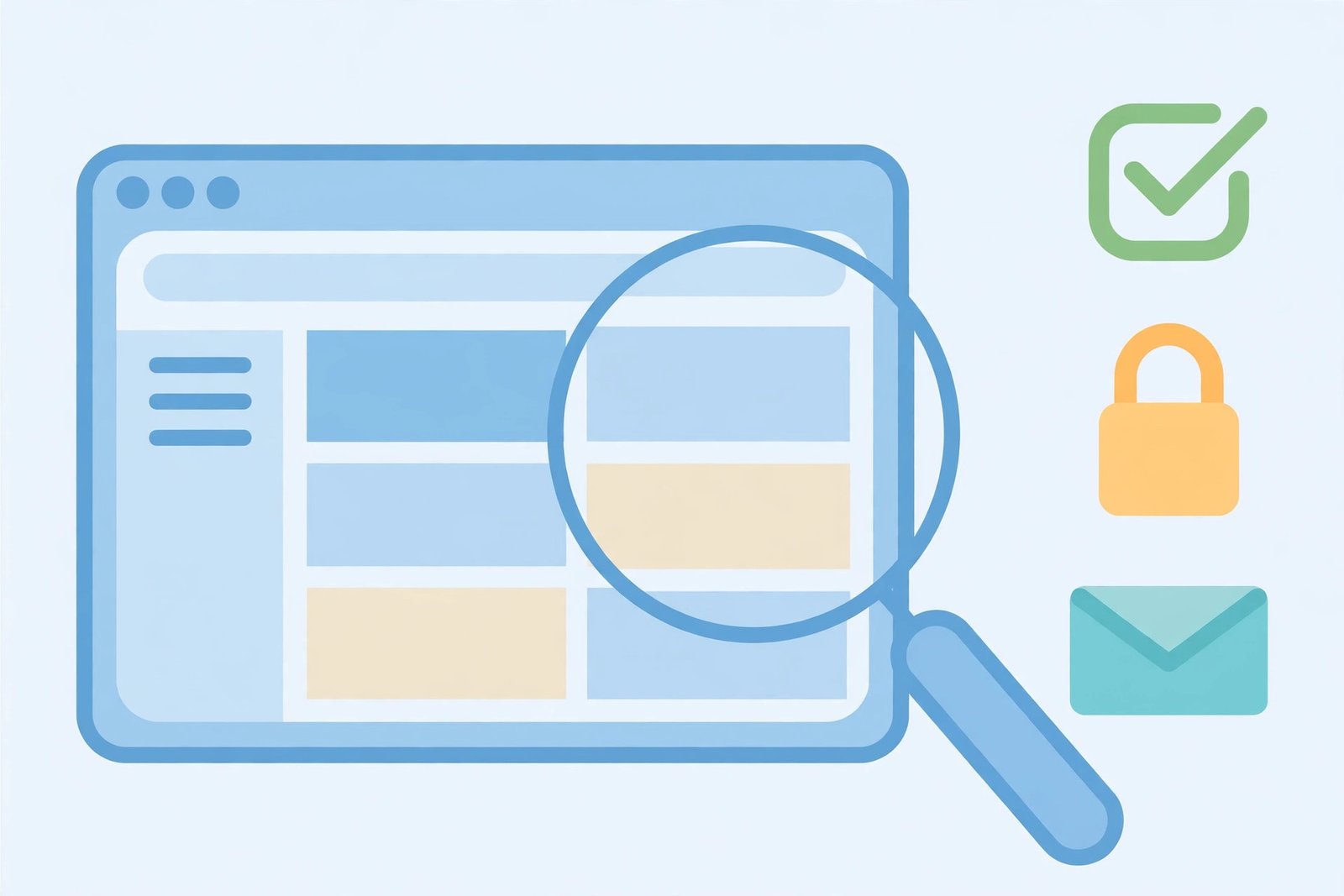
How to Check Whether a Small Website Is Legitimate
Beyond the first visit, a few deeper checks can build (or destroy) confidence in a site like pinoroduct com. Look for a consistent identity: the same name, branding, and contact details across the site and any social profiles it links to. Check whether the site is indexed normally by search engines and whether its pages have existed for a while — brand-new domains behind big claims are a classic warning sign. If the site sells anything, confirm that payment happens through recognized processors and that refund and shipping terms are written down somewhere you can re-read later.
It also helps to compare how the site presents itself against similar small sites you already know. Our guide to Magfusehub Com walks through the same legitimacy questions for another little-documented address, and reading the two side by side shows how consistent these checks are from site to site.
What to Do If the Site Does Not Load
Small websites go offline more often than big platforms. If pinoroduct com does not load, do not immediately hunt for a “mirror” or similarly spelled address — typo-squatted copies of small sites are a known trick for catching careless visitors. Instead, wait and try the exact address again later, check whether your own connection is the problem by opening other sites, and look for any official social profile that might announce maintenance or a move. If the site stays down, treat it as retired and look for an established alternative for whatever you needed. Our overview of Pushwiki Com explains how wiki-style and other small sites are typically structured, which can help you find a comparable replacement.
Small Sites vs. Large Platforms: Setting Expectations
Judging pinoroduct com fairly means comparing it with the right yardstick. Large platforms offer polished apps, 24-hour support teams, and thousands of reviews — but they also set the expectations people unconsciously bring to every site. A small website will usually be simpler: fewer features, slower replies, and a design that may look plain. None of that is evidence of a scam. The things that actually matter — honest descriptions, secure pages, working contact details, and terms you can read before paying — cost a site operator very little, so their absence is meaningful while a modest design is not.
The reverse also holds: a slick, modern design is cheap to buy as a template and proves nothing about honesty. Spend your attention on the verifiable details, and let small sites be small.
Staying Safe While Browsing Little-Known Sites
A few habits protect you everywhere, not just on pinoroduct com. Use a unique password if you ever register on a small site, and never reuse your email or banking password. Prefer paying by methods that offer buyer protection, and avoid sending money by gift card, wire transfer, or cryptocurrency to any site you cannot verify — those payments are effectively impossible to reverse. Keep your browser and antivirus up to date, and be skeptical of any site that urges urgency: countdown timers, “only two left” warnings, and limited-time claims are pressure tactics, not information.
Finally, trust the pattern, not the promise. A small site that loads securely, explains itself plainly, lists real contact details, and makes modest claims is behaving like a genuine small website. A site that hides its owners, exaggerates its offers, and pushes you to act fast is telling you something important — believe it.
Conclusion
Pinoroduct com is a little-documented website, and the honest answer to “what is it?” is that public information is limited and the site itself, visited carefully, is the best source. Use the step-by-step first visit and the checklist in this guide, verify what you can, and keep your commitments small until the site has earned your trust. Those habits will serve you well far beyond this one address.
Frequently Asked Questions
What is pinoroduct com?
Pinoroduct.com appears to be a small independent website with limited public documentation. Its name suggests a possible product focus, but the most reliable way to know what it offers is to visit the site carefully and read what it says about itself.
Is pinoroduct com safe to use?
There is no widely published safety record for the site, so treat it like any unfamiliar address: check for HTTPS, find its contact and policy pages, search for independent reviews, and avoid payments or downloads until you are satisfied it is legitimate.
Who owns pinoroduct com?
The owner is not clearly established in public sources. A WHOIS lookup may show basic domain registration details, though many small sites use privacy protection that hides personal information.
What should I check before buying or registering on a small site?
Confirm the exact domain, a secure connection, written refund and privacy terms, recognized payment methods, and at least one independent mention of the site. Start with the smallest possible commitment.
Why do some small websites have so little information available?
Many small sites are run by individuals or tiny teams who never attract press or review coverage. Limited information is common and not proof of a scam — but it does mean you should verify more yourself.
How can I contact the people behind pinoroduct com?
Look for a Contact or About page on the site itself, which should list an email address or a working contact form. If neither exists, treat that as a caution sign. Test any address you find with a simple question before relying on the site for anything important.
What if pinoroduct com does not open?
Check your own connection, wait, and retry the exact address later. Avoid similarly spelled “mirror” sites, which can be traps, and look for an established alternative if the site remains offline.


Leave a Reply