

Most people know Magazine Luiza Empresas only as a phrase they saw in a search result, but behind it sits a large and growing part of the Magalu business. Magazine Luiza is not only a retailer for consumers: it is also a platform for companies. Businesses sell their products to millions of customers through the Magalu marketplace, buy equipment and supplies for their own operations, use Magalu’s logistics network to move their goods, and reach customers through the company’s advertising and financial services. This guide explains what Magazine Luiza Empresas covers, how a company can sell on the Magalu marketplace, what businesses can buy from Magalu, and how to make contact through the official channels.

A note on accuracy first. Magazine Luiza’s business services change over time: commission rates, seller requirements, and contact details are updated by the company, and third-party articles often quote old figures as if they were current. This guide sticks to what is stable and verifiable, and where a detail can change, it tells you where to confirm it officially. The company’s official website is magazineluiza.com.br, and its business contact channels are published on its own pages, so always verify a rate, a requirement, or an address there before you make a business decision.
What Magazine Luiza Empresas Means
Magazine Luiza Empresas is the business-facing side of Magazine Luiza, the Brazilian retailer better known as Magalu. Where the consumer side of the company sells televisions, smartphones, furniture, and appliances to households, the business side serves companies in several ways: as a sales channel, as a supplier, as a logistics partner, and as a provider of financial and advertising services.
The distinction matters because the needs are different. A consumer wants a good price, fast delivery, and an easy return. A business wants predictable terms, volume pricing, invoicing that fits its accounting, and a platform that can handle many orders without breaking. Magazine Luiza built its business offering around those needs, and it has become a meaningful part of the company’s revenue and strategy.
It helps to grasp how big the operation is. Magalu counts well over a thousand shops nationwide, works with a seller community in the six figures, and reaches an online audience the company puts at close to 50 million people. Its logistics arm, Magalog, calls itself a heavyweight in Brazilian delivery, looking after roughly a hundred outside customers and bringing in over 3 billion reais during 2025. When a business works with Magalu, it is plugging into that entire system, not just a single website. For a general picture of the company behind all of this, see our guide to how Magazine Luiza works today.
Selling on the Magalu Marketplace
The most common reason a company looks into Magazine Luiza Empresas is to sell on the Magalu marketplace. The marketplace is the part of the Magalu website and app where third-party sellers list their products alongside the items sold by Magazine Luiza itself. For a seller, the appeal is obvious: instead of building an online store from scratch and spending money to attract visitors, you list your products where tens of millions of shoppers already go.
To sell on the marketplace, a business needs a Brazilian company registration, known as a CNPJ, because the platform is built for Brazilian companies selling to Brazilian customers. Sellers also need the ability to fulfill orders across Brazil, which usually means having stock in a Brazilian warehouse or a reliable logistics arrangement, and product information in Portuguese, since that is the language of the platform and its customers.
The practical process follows a familiar pattern for marketplaces. The seller registers on the platform, provides company and tax information, and creates product listings with photos, descriptions, prices, and stock levels. When an order arrives, the seller is responsible for packing and shipping the product within the promised time, and for handling customer questions and returns according to the platform’s rules. Magazine Luiza provides the storefront, the payment processing, and the traffic, and it charges a commission on each sale.
Commission rates and incentive offers change from time to time. In 2025, for example, the company launched a half-price commission offer for new sellers, cutting the marketplace rate to 9.9% according to its investor relations releases. Offers like that come and go, so a seller should always confirm the current rate on the official seller pages before planning around a particular margin. The rate is only part of the cost: sellers should also account for payment processing fees, logistics, packaging, and the cost of handling returns.
What Kinds of Businesses Sell on Magalu?
The marketplace hosts a wide range of sellers, from large brands to small producers. Big brands use it as an additional sales channel alongside their own stores, because it puts their products in front of customers who might never visit their own website. Medium-sized retailers use it to expand beyond their home region without opening new physical shops. And small businesses use it to reach a national audience for the first time.
Small sellers get particular attention from Magalu. Together with Sebrae, the organisation that backs Brazil’s micro and small firms, Magazine Luiza runs onboarding support for owners who have never sold online: short courses, one-to-one advice, and workshops covering stock control, product pages, and answering buyers. A craft maker or family shop that once sold only to neighbours can suddenly take orders from every state, which changes the size of the business entirely.
Which product lines do best here mirrors what Magalu already sells well. Tech, white goods, and furniture bring in the most traffic, yet shoppers also browse plenty of other departments: skincare and perfume, running shoes and gym gear, children’s toys, books, and supplies for pets, among others. Some of those shelves are stocked by group labels like Época Cosméticos and Netshoes, while the rest belong to outside merchants. Before joining, look at how crowded your own niche is and what rival sellers are charging.
Magalog: Logistics for Other Companies
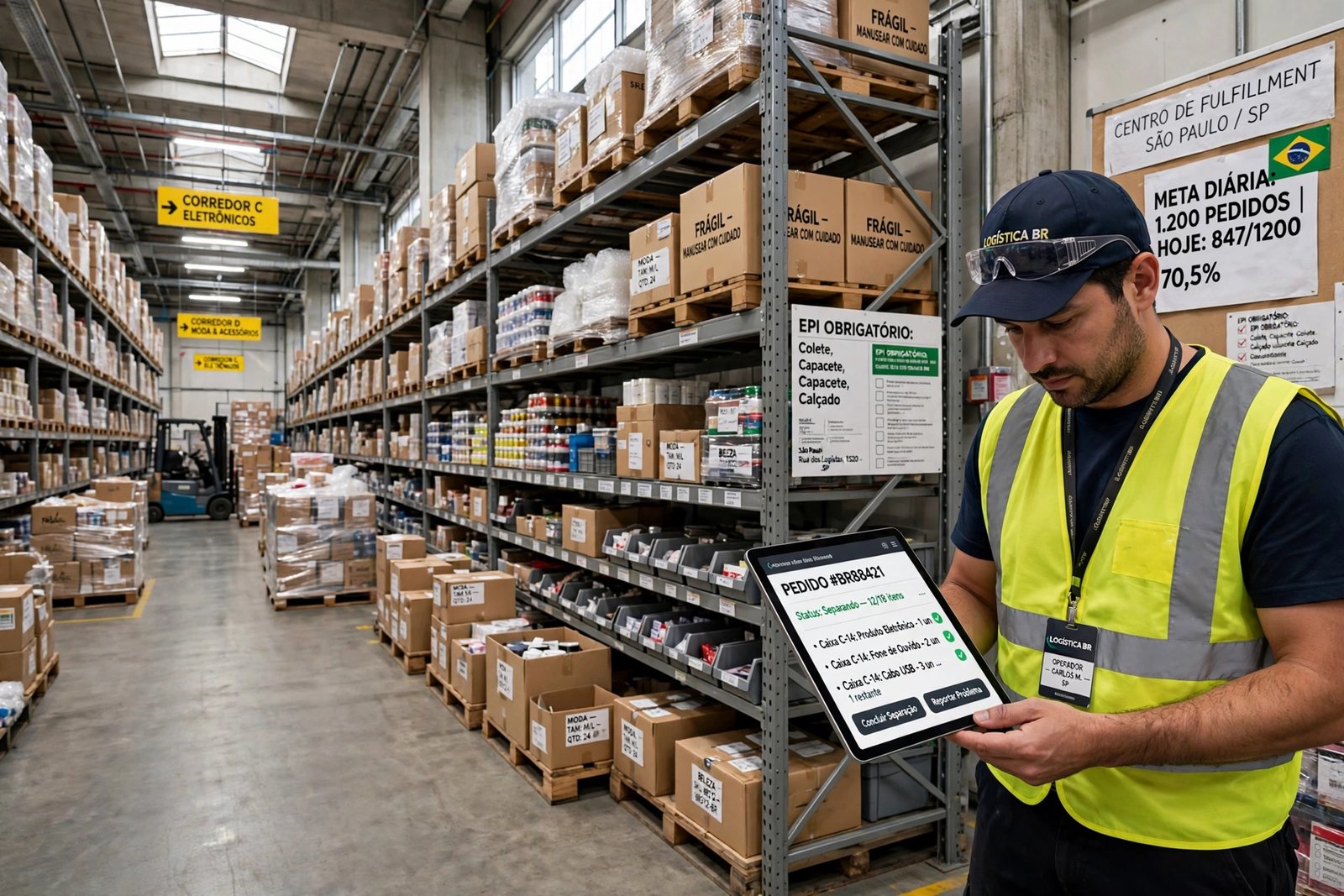
Logistics is the unglamorous backbone of e-commerce, and it is one of the areas where Magazine Luiza has invested most heavily. Magalog is the group’s logistics operation, and it does more than move Magalu’s own products: it serves external clients as well, handling warehousing, distribution, and last-mile delivery for around 100 companies.
For a business, using an established logistics operator has clear advantages. Building your own warehouse network across a country as large as Brazil is expensive and slow, and delivery reliability is hard to achieve on your own. A partner like Magalog offers existing distribution centers, established transport routes, and experience with the peaks and troughs of Brazilian e-commerce, from ordinary weeks to the Black Friday rush. The company’s recent partnerships with Amazon and Mercado Livre, under which Magalu sells tens of thousands of items through those platforms with deliveries handled by Magalog, show how central logistics has become to its strategy.
If your company is considering outsourcing logistics, the questions to ask are practical: which regions are covered, what are the delivery times to your main markets, how are returns handled, what does the service cost at your volume, and what happens during peak periods. Get those answers in writing before you sign, and compare them with at least one other provider, because logistics is a long-term commitment and switching later is disruptive.
Buying for Your Business at Magazine Luiza
The other side of Magazine Luiza Empresas is procurement: companies buying from Magalu for their own use. A restaurant needs a refrigerator, an office needs notebooks and monitors, a hotel needs televisions and air conditioning, a small retailer needs shelves and a point-of-sale setup. Magazine Luiza sells all of these, and businesses often buy through the same website and app as consumers, sometimes with business invoicing and payment terms arranged through the company’s business channels.
For larger purchases, it is worth contacting the business team rather than ordering as an ordinary consumer. Volume orders can qualify for different pricing, and the company can advise on delivery and installation for items such as large appliances and furniture. The official business contact published by the company is the email address b2b@magazineluiza.com.br, and the company’s business pages also publish a telephone number. Because contact details can change, confirm them on the official Magazine Luiza website before you use them, and be cautious of any other address or number you find on a third-party site.
When buying for a business, a few habits help. First, check whether the product comes with a warranty that covers commercial use, since some consumer warranties have different terms when a product is used in a business. Second, confirm the delivery and installation arrangements in advance, especially for large items, and check whether assembly is included or charged separately. Third, keep the invoice, known in Brazil as the nota fiscal, because your accounting will need it, and because it is also your proof of purchase if anything goes wrong. Finally, compare the total cost, including delivery and installation, with at least one other supplier, because the cheapest product price is not always the cheapest overall deal.
Magalu Ads, Financial Services, and the Wider Ecosystem
Beyond selling and logistics, Magazine Luiza has built a set of services that businesses can use to grow. Magalu Ads is the company’s advertising platform, which lets sellers and brands promote their products inside the Magalu website and app, reaching shoppers at the moment they are looking to buy. For a seller on the marketplace, advertising can be the difference between a listing that is seen and one that is buried, and the company has been opening this service to third parties as part of its ecosystem strategy.
Money tools form another strand of the ecosystem. Under the MagaluPay name, the group runs checkout and credit features for shoppers, paying over several months being the best-known example, and it has built seller-side products too, from taking card payments to tracking money owed by customers. For a small seller, getting paid quickly and predictably matters as much as getting the sale in the first place, so these services are worth understanding before you start selling.
The company has also expanded into cloud services through Magalu Cloud, which received significant development funding, including a large approved loan from Brazil’s development bank for expanding its storage services. Cloud infrastructure is a long way from selling televisions, but it fits the same logic: Magazine Luiza built technology to run its own business, and it now sells that technology to others.
How to Start: A Practical Checklist for Businesses
If your company is considering working with Magazine Luiza, start with a clear decision about which side of the business you need. Are you selling, buying, or outsourcing logistics? Each path has a different entry point, and trying to do all three at once is a good way to get confused. Pick the one that matters most, and get that working first.
For sellers, the checklist is straightforward. Confirm that your company has a valid CNPJ and that you can fulfill orders in Brazil. Prepare your product catalog with good photos, accurate descriptions in Portuguese, and realistic prices. Check the current commission rate and the payment terms on the official seller pages. Start with a small range of your best products, learn how the platform works, and expand once you understand the rhythm of orders, questions, and returns.
For buyers, the checklist is simpler. Define what you need, compare the total cost including delivery and installation, confirm the warranty terms for commercial use, and keep your invoices organized. If the order is large, contact the business team through the official channels to ask about volume terms.
For logistics, the checklist is about due diligence. Ask for coverage maps, delivery times, return handling, and pricing at your volume, and get the answers in writing. Compare with other providers, and start with a trial period if the operator offers one.
In all three cases, the same warning applies: only use contact details published on Magazine Luiza’s own website. The business email and phone number you find on a third-party directory may be out of date, or worse, may belong to someone impersonating the company. Confirm the details officially before you share company information or send money. If you are hiring for your own business rather than buying or selling, you may also want our guide to Magazine Luiza jobs, which explains how the company’s own recruitment works.
Frequently Asked Questions
What is Magazine Luiza Empresas?
Magazine Luiza Empresas is the business-facing side of Magazine Luiza (Magalu). It covers selling on the Magalu marketplace, buying products for business use, logistics services through Magalog, advertising on the Magalu platform, and financial services for sellers and businesses.
How can my company sell on the Magalu marketplace?
Your company needs a Brazilian CNPJ registration and the ability to fulfill orders in Brazil. Register as a seller on the official Magalu seller pages, provide your company and tax information, create product listings in Portuguese with photos and prices, and confirm the current commission rate and payment terms before you start selling.
What is the commission for selling on Magazine Luiza?
The commission rate changes over time and depends on the category and on current offers. In 2025 the company offered a half-price commission of 9.9% for new sellers, according to its investor relations releases. Always confirm the current rate on the official seller pages before planning your margins.
How do I contact Magazine Luiza for business enquiries?
The company publishes a business contact email, b2b@magazineluiza.com.br, and a business telephone number on its official pages. Confirm these details on the official Magazine Luiza website before using them, since contact details can change, and do not trust business contact details from third-party directories.
Can small businesses sell on Magazine Luiza?
Yes, small businesses can sell on the Magalu marketplace, and Magazine Luiza has partnered with Sebrae to help micro and small businesses get started, with training on using the platform, managing inventory, and handling customer service. You still need a CNPJ and the ability to fulfill orders in Brazil.
What is Magalog?
Magalog is Magazine Luiza’s logistics operation. It handles warehousing, distribution, and delivery for Magalu’s own products and for around 100 external client companies, and it handles deliveries for Magalu’s partnerships with Amazon and Mercado Livre.
Conclusion
Magazine Luiza Empresas is a reminder that Magalu is more than a shop. Behind the blue storefronts sits a platform that lets companies sell to tens of millions of customers, a logistics network that moves goods across Brazil, and a set of financial and advertising services that help businesses grow. For a company thinking about working with Magalu, the path is clear: decide whether you are selling, buying, or outsourcing logistics, check the current terms on the official channels, and start small. If you want to understand the consumer side as well, our guide to how Magazine Luiza works today is a good companion read, and our overview of Magazine Luiza offers explains the promotions your customers will be seeing. For professional networking with the company, see our guide to Magazine Luiza on LinkedIn.



Leave a Reply