

Android powers the majority of smartphones worldwide, which makes it the most important platform for reaching a global audience. But building a great Android app takes more than a good idea — it takes the right development partner. A custom Android app development company builds tailored apps from the ground up, rather than forcing your vision into a generic template.
This guide explains what to expect from such companies and how to choose one that fits your project, budget, and timeline.

What Does “Custom” Mean in Android Development?
“Custom” means the app is designed and built specifically for your needs: your brand, your users, your workflows, and your integrations. Off-the-shelf solutions and app builders are cheaper and faster, but they limit what you can do and often look generic. A custom build gives you full control over features, design, performance, and how the app grows over time.
Custom development makes the most sense when your app has unique features, needs to connect with existing business systems, must handle large numbers of users, or represents a core part of your brand. For a simple informational app, a template might be enough — but for anything ambitious, custom is the way to go.
Specialist Company vs. Freelancers: Which Is Better?
Both can work, depending on the project. Freelancers cost less and can be great for small, well-defined tasks. But an app is rarely small and well-defined for long — requirements change, bugs appear, and designs evolve.
A company brings a full team: project managers, designers, developers, and testers who have shipped apps together before. You get continuity if someone leaves, structured quality assurance, and someone to call after launch. For anything beyond a tiny prototype, the reliability of a company usually outweighs the savings of going solo. Our mobile app development tips cover what the build process looks like from the client’s side, whichever route you take.
How to Evaluate a Custom Android App Development Company
Check Their Apps on the Google Play Store
This is the single most revealing step. Download two or three apps they built and use them. Are they fast and stable? Do they look modern and follow Android design conventions? Read the Play Store reviews — patterns of complaints about crashes or poor support tell you more than any sales pitch.
Assess Technical Expertise
Ask what technologies they use: Kotlin is the modern standard for native Android development, while frameworks like Flutter or React Native suit cross-platform projects. They should explain their choice in terms of your project, not just personal preference. Also ask how they handle different screen sizes, Android versions, and manufacturer customizations — Android’s diversity is its biggest technical challenge.
Understand Their Development Process
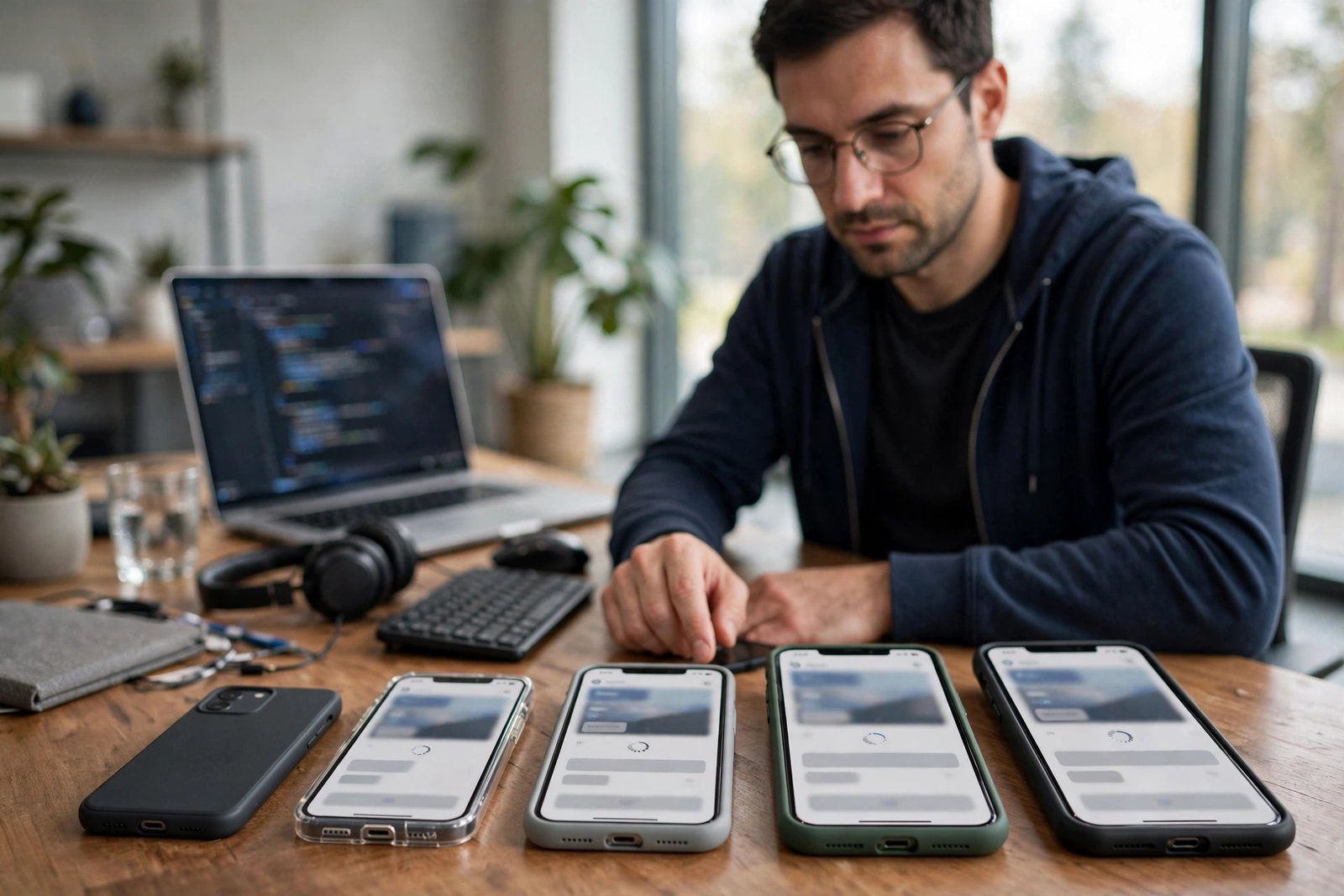
Professional teams work in structured phases with regular demos you can actually tap through. Ask how often you will see progress, how feedback is incorporated, and how they handle testing across devices. A company that cannot describe its process clearly probably does not have one.
Confirm Post-Launch Support
Android evolves constantly — new OS versions, new devices, new Play Store policies. Your app will need updates, and you will want the same team maintaining it. Ask about maintenance plans, response times for critical bugs, and what happens to your source code (you should own it outright).
Understanding Pricing Models
Android development companies typically price in one of three ways:
- Fixed price: One agreed amount for a defined scope. Good when requirements are crystal clear; painful when they change mid-project.
- Time and materials: You pay for actual hours worked. More flexible for evolving projects, but requires trust and transparent reporting.
- Dedicated team: A monthly rate for a team working only on your project. Best for long-term products with continuous development.
As a rough guide, a simple custom Android app often starts around $20,000–$40,000, while complex apps with backends, integrations, and polished design can run $75,000–$200,000+. Be skeptical of quotes far below market — they usually mean inexperienced developers or hidden costs later.
Questions to Ask Before Signing
- Can we try apps you have published on the Play Store?
- Who will be on our team, and can we meet them?
- How do you test across different Android devices and OS versions?
- What happens if we need to change features mid-project?
- Do we own 100% of the source code and accounts?
- What does your post-launch support include, and what does it cost?
- How do you handle app store submission and policy compliance?
If your project also needs a website or web platform alongside the app, consider whether the same partner can handle it — many teams that build apps also work as a web design and development company, which keeps your brand consistent everywhere.
Frequently Asked Questions
How long does it take to build a custom Android app?
A straightforward app typically takes 3–6 months from kickoff to Play Store launch. Complex apps with custom backends, integrations, or advanced features can take 6–12 months. Clear requirements are the biggest factor in staying on schedule.
Should my app be native Android or cross-platform?
Native (Kotlin) gives the best performance and deepest access to Android features. Cross-platform (Flutter/React Native) lets one team target both Android and iOS, saving time and money. Choose based on whether you need iOS too and how demanding the app’s features are.
What is the biggest challenge in Android development?
Device fragmentation: thousands of different phones with varying screen sizes, hardware capabilities, and Android versions. A good company tests broadly and designs flexibly to handle this diversity.
Do I need to maintain the app after launch?
Yes. Android OS updates, new devices, security patches, and evolving user expectations all require ongoing maintenance. Budget for it from the start — an unmaintained app deteriorates quickly.
Can a company also publish the app for me?
Most handle Play Store submission as part of the project, including store listings, screenshots, and policy compliance. Confirm this is included rather than assumed.
Conclusion
The right custom Android app development company combines proven Play Store results, solid technical judgment, a transparent process, and reliable post-launch support. Do your homework: try their apps, ask hard questions, and make sure you own everything you pay for. With the right partner, your Android app becomes an asset that grows with your business instead of a project you regret.



Leave a Reply